When a roof continues to leak after repairs have been completed, the issue is seldom the rain alone. In most cases, the leak was not traced accurately, the repair scope was too limited, or several related roof defects were not addressed together.
This is a common problem for property owners in KwaZulu-Natal. Roofs in KZN are exposed to heavy rainfall, humidity, coastal air, strong winds, blocked drainage, ageing waterproofing, and, in many areas, salt-related corrosion. When a roof already has a weak point, these conditions can expose the same problem repeatedly.
A recurring leak should therefore be treated as a clear warning sign. If the same ceiling stain returns after a repair, the previous work may have addressed the visible symptom rather than the source of water entry. Over time, repeated patching can become more costly than a proper inspection and correctly scoped repair.
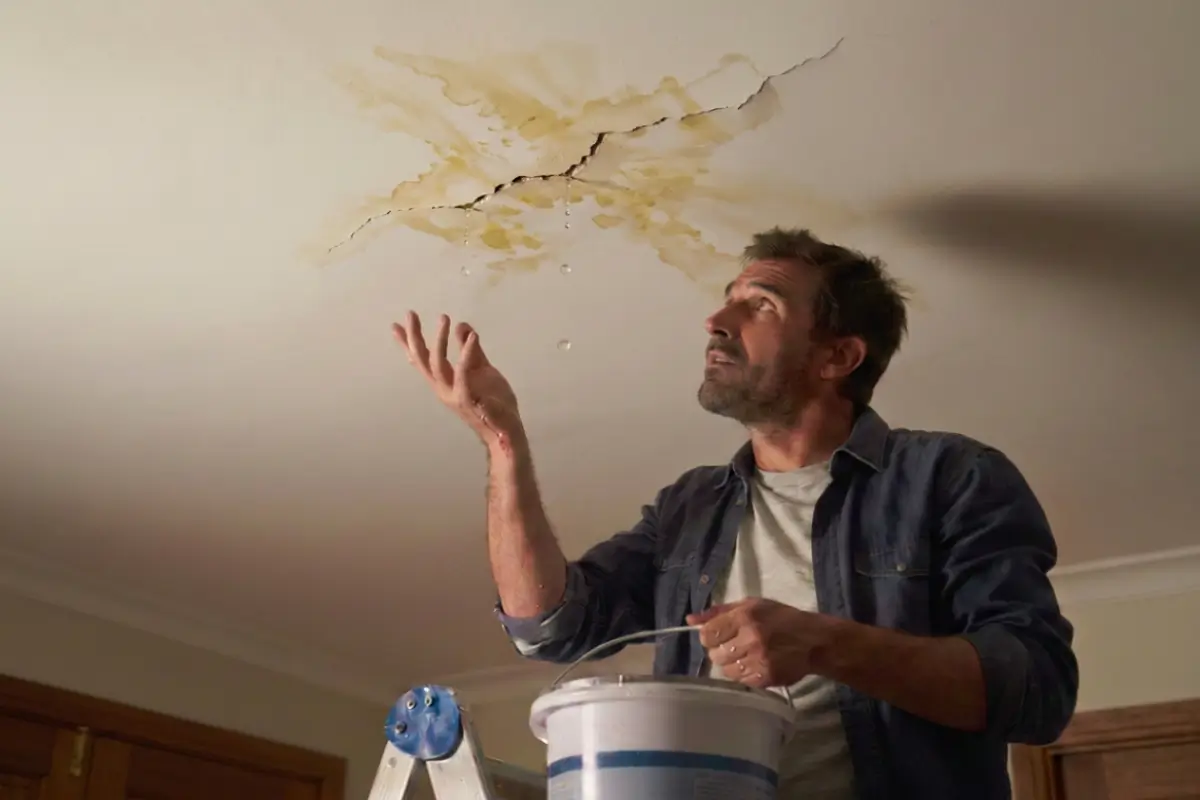
A common mistake is assuming that the leak is directly above the wet patch visible on the ceiling. Roof leaks do not always follow a straight path. Water can enter at one point, then travel along timber, concrete, roof sheets, tile underlay, flashings, parapets, or gutters before it appears inside the building. The internal mark shows where the water became visible, not necessarily where the defect started.
This is why quick patch repairs often fail. Sealant may slow the leak temporarily, but it will not resolve the underlying issue if the cause is a failed flashing, cracked tile, loose ridge, rusted fixing, blocked gutter, damaged roof sheet, poor drainage fall, or failing waterproofing. In many cases, the leak returns because the repair covered the obvious area without tracing the full water path.
In KZN, roof leaks are often caused by linked defects rather than one isolated problem. A blocked gutter can force water into a flashing weakness. A cracked parapet can allow moisture behind waterproofing. Ponding water on a flat roof can place continuous pressure on a weak membrane. A loose metal roof fixing can leak only when wind-driven rain hits the roof from a specific direction. A sheet lap may appear sound in light rain but fail during a heavy coastal storm.
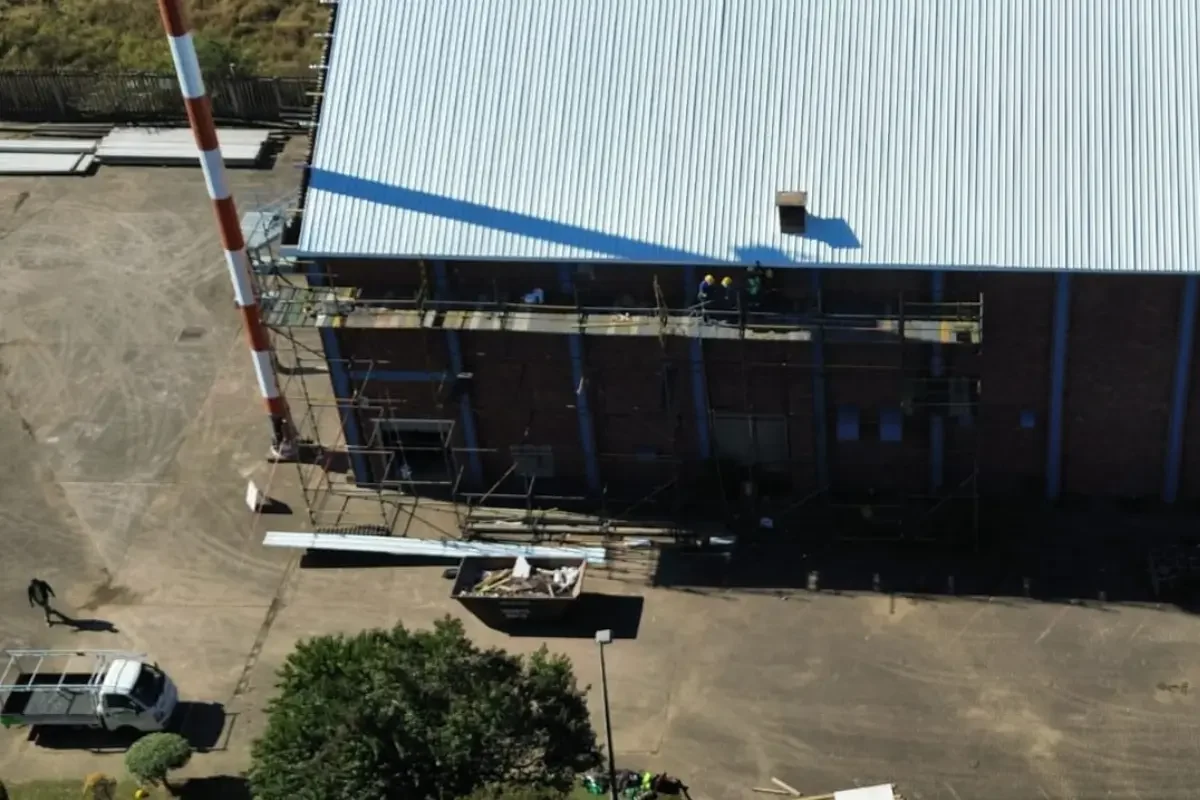
For this reason, the repair scope is critical. The roof should be assessed as a complete system, not as a single stain on a ceiling. A proper inspection should include the roof covering, flashings, ridges, laps, fixings, valleys, gutters, downpipes, outlets, parapets, waterproofing, skylights, vents, wall junctions, drainage falls, and previous repair areas. On coastal properties, corrosion should also be checked around fasteners, roof sheets, flashings, and exposed metal details.
Flat and low-slope roofs
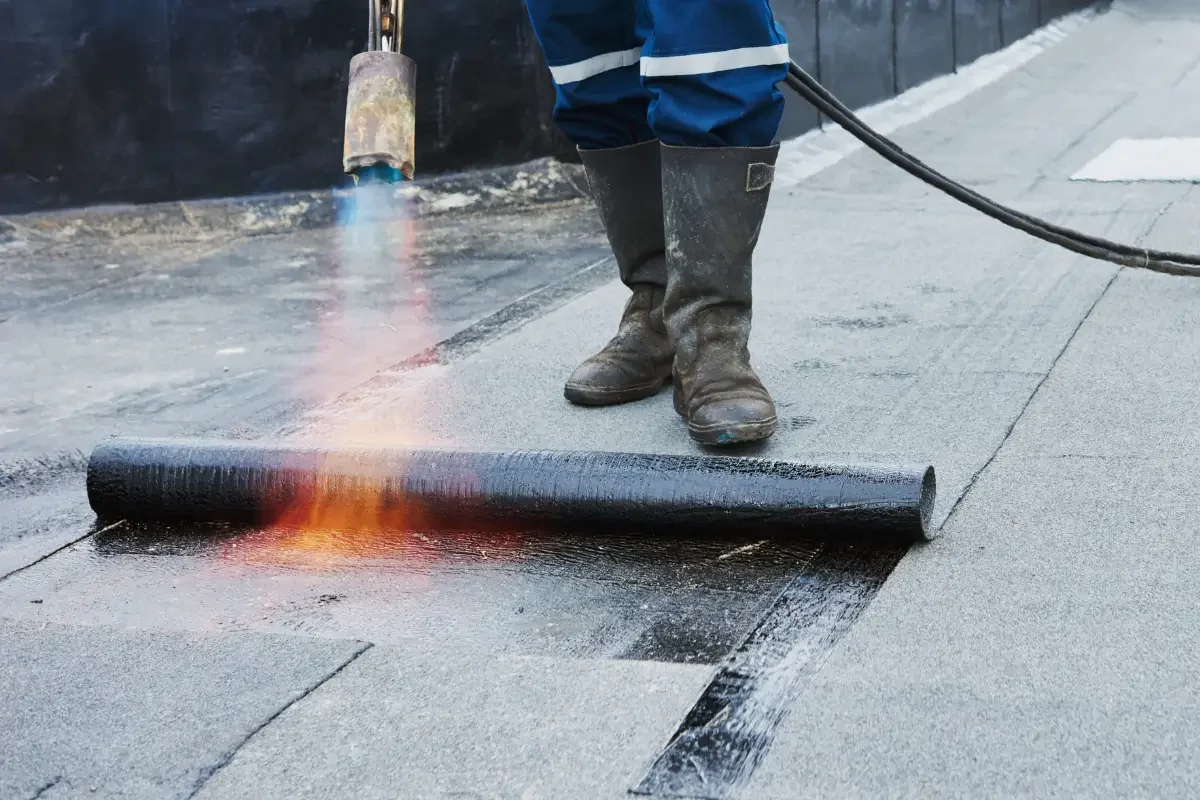
Flat and low-slope roofs require particular care. Many homes, complexes, offices, shops, and industrial buildings in KZN include flat roof sections that rely on effective waterproofing and correct drainage. When water ponds on these surfaces, it accelerates deterioration and exposes weak points around upstands, outlets, joints, and penetrations. Applying another coating over a poorly drained or poorly prepared surface rarely provides a lasting solution.
Gutters and stormwater drainage
Gutters and stormwater drainage also play a major role. A roof may appear to be leaking because water is not leaving the building correctly. Blocked gutters, undersized downpipes, poor outlet positions, leaves, silt, and storm debris can force water back under roof edges or into wall and fascia details. During heavy KZN rain, drainage weaknesses can quickly expose defects that remain hidden in normal conditions.
Storm damage vs Maintenance-related failure
Property owners should also distinguish between storm damage and maintenance-related failure. Storm damage may include lifted sheets, cracked tiles, displaced flashings, damaged gutters, impact from branches, or water entry after severe wind and rain. Maintenance-related failure may include old waterproofing, rusted fixings, blocked gutters, long-term ponding, cracked sealant, and neglected roof details. This distinction is important for repair planning and insurance discussions.
Recurring leaks cost more than many owners realise. The cost is not limited to the roof call-out. Repeated water entry can damage ceiling boards, paintwork, insulation, timber, electrical points, cupboards, flooring, stock, equipment, and internal finishes. It can also increase mould risk and create tenant frustration. On commercial sites, repeat leaks can disrupt operations, complicate maintenance planning, and reduce confidence in the building.
The lowest quote is therefore not always the best-value repair. The best repair is the one that solves the actual problem. A diagnosis-led repair may cost more than a quick patch, but it can reduce repeat labour, prevent further internal damage, and avoid paying for the same leak multiple times.
A proper recurring leak inspection should answer five key questions.
- Where is the water entering?
- How is it travelling through the roof or building?
- Which roof details are contributing to the leak?
- Are drainage, waterproofing, corrosion, or storm damage involved?
- What repair scope is required to stop the full defect chain?
This is the approach Elite Roofing & Waterproofing follows. The process begins with inspection-led fault-finding rather than guesswork. The roof detail, water path, roof type, surrounding drainage, waterproofing areas, and previous repair points are assessed so the repair plan addresses the source of the leak instead of delaying the problem.
If your roof leak keeps returning, avoid further cosmetic fixes. The next step should be a more accurate diagnosis, not another layer of sealant over the same visible symptom. For KZN property owners, the cause may involve heavy rain, coastal exposure, blocked drainage, failed waterproofing, loose flashings, corrosion, storm damage, or several connected defects working together.
A recurring leak is a warning sign. Address it early, repair the full cause, and protect the building before the internal damage becomes more expensive.
For a proper diagnosis-led solution, contact us to arrange a professional roof inspection; or speak to one of our experts:
Darren: +27 73 306 4448
Justin: +27 84 942 6279
or, Email Us
BONUS INFORMATION:
Here are some of the Common Questions we get about recurring roof leaks –
Q: Why does a roof leak come back after it was repaired?
A roof leak usually returns because the original fault was not diagnosed correctly. The repair may have sealed the visible symptom while leaving the real water entry point, failed flashing, blocked gutter, waterproofing defect, or linked roof weakness untreated.
Q: Are recurring roof leaks common in KZN?
Yes. KZN roofs are exposed to heavy rain, humidity, coastal corrosion, wind-driven storms, and drainage pressure. These conditions can expose poor repairs and weak roof details faster than in drier inland areas.
Q: Does a recurring leak mean the whole roof must be replaced?
Not always. Many recurring leaks can be solved with targeted repairs if the structure is sound and the real defect is found early. Replacement is usually considered only when the roof has widespread corrosion, structural deterioration, severe waterproofing failure, or multiple major defects.
Q: Why is the ceiling stain not always below the leak?
Water can travel through the roof structure before it becomes visible. It may move along timber, concrete, roof sheets, tile underlay, wall junctions, or flashings before appearing on a ceiling or wall.
Q: Can blocked gutters cause roof leaks?
Yes. Blocked gutters can force water backwards under roof edges, into fascia boards, behind walls, or towards flashing weaknesses. In heavy rain, poor drainage can turn a minor weakness into an active leak.
Q: Is repeated patching a waste of money?
Repeated patching can become expensive when it does not correct the underlying cause. A properly scoped repair based on inspection usually offers better long-term value than paying for the same leak repeatedly.