In the roofing and similar businesses, working at height is a daily reality. The view from the top might be impressive, but the risks are undeniable. A fall from height remains one of the leading causes of serious injury and death in the workplace. This isn't just a tragic statistic – it's a critical issue governed by strict legislation designed to protect lives.
Introduction
For any employer or employee in South Africa, understanding the legal framework and practical safety measures is not optional—it's a legal and moral obligation. At Elite Roofing and Waterproofing, we consider the safety of our customers, their personnel and visitors, together with the safety of our staff to be of utmost importance. This is why we strictly operate within the rules of the OHS Act. We believe that rigorous adherence to safety protocols is not just about legal compliance, it's about ensuring everyone goes home safely at the end of each day. Our commitment to safety shapes everything we do, from planning and training to equipment selection and on-site practices.
This guide will break down the essentials of the Occupational Health and Safety (OHS) Act 85 of 1993, specifically as it applies to working at heights, and provide clear do’s and don’ts to foster a culture of safety.
The Legal Bedrock: The OHS Act and Construction Regulations
The primary piece of legislation is the Occupational Health and Safety Act 85 of 1993. This Act sets the foundation by placing a general duty on employers to provide and maintain a working environment that is safe and without risk to the health of their employees.
However, for specific high-risk activities like working at heights, we must look to the more detailed Construction Regulations, 2014. These regulations, promulgated under the OHS Act, provide explicit instructions. The most relevant section for our topic is Regulation 10: Fall Protection.
This regulation legally mandates that every employer and contractor take proactive steps. The core requirement is the development of a Fall Protection Plan. This is not just a document to be filed away; it is a live, site-specific plan that must be developed and implemented by a competent person. It must outline the risks, the procedures to mitigate them, and the emergency rescue plans.
The Do's: Your Checklist for Compliance and Safety
Following these “do's” will ensure you are not only compliant with the law but are actively creating a safer workplace.
DO: Conduct a Thorough Risk Assessment
Before any work begins, a competent person must assess all potential fall risks. This isn't just about identifying the height; it's about evaluating the work surface, weather conditions, potential for falling objects, and the condition of the equipment to be used. The risk assessment is the foundation of your Fall Protection Plan.
DO: Develop and Implement a Site-Specific Fall Protection Plan
A generic plan is a non-compliant plan. Your Fall Protection Plan must be tailored to the specific site and task. It should include:
- A risk assessment.
- The procedures for fall prevention, arrest, and rescue.
- Proof of medical fitness and competency for all workers involved.
- Inspection records for all equipment.
- This plan must be communicated to all relevant employees before work commences.
DO: Ensure All Workers are Trained and Medically Fit
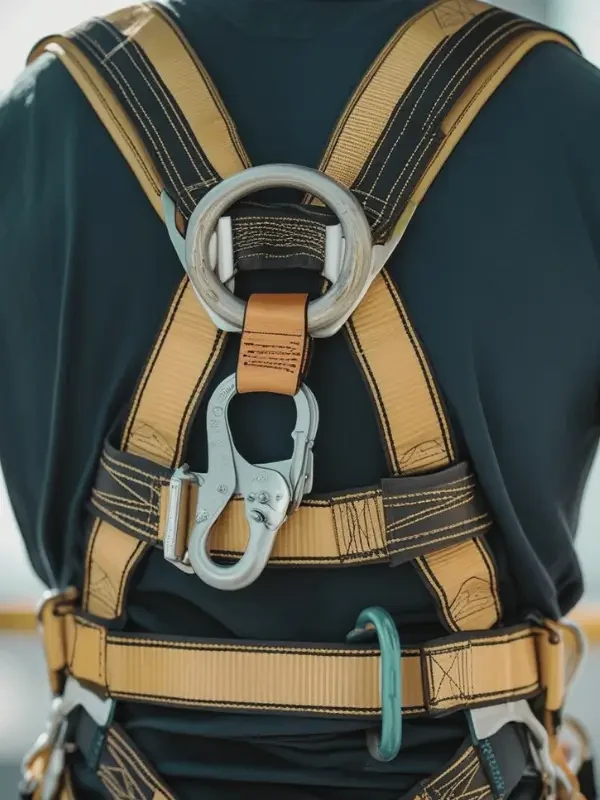
No one should work at height without proper training. This includes training on how to correctly inspect, fit, and use their Personal Protective Equipment (PPE) like harnesses and lanyards. Furthermore, the regulations require that employees are medically fit to work at height. Conditions like epilepsy, vertigo, or a fear of heights could pose a direct threat to the worker and their colleagues.
DO: Inspect All Equipment Before Every Use
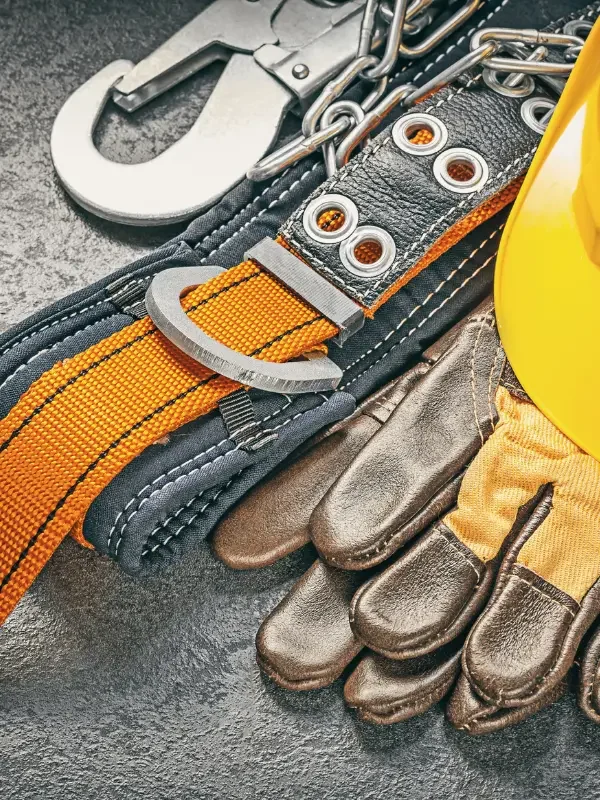
This is non-negotiable. Every piece of equipment, from ladders and scaffolding to harnesses and lanyards, must be inspected for defects by the user before each shift. A formal, documented inspection by a competent person should also be carried out at regular intervals. Look for frays, cracks, rust, missing parts, or any signs of wear and tear.
DO: Use the Correct Equipment for the Job
Ladders are primarily for access, not for use as a work platform for extended periods. If the task is complex or long, use appropriate solutions like scaffolding, mobile elevated work platforms (MEWPs), or podium steps. Ensure scaffolding is erected, inspected, and signed off by a competent person, with a visible tag (e.g., a green “safe for use” tag).
DO: Establish and Maintain Exclusion Zones
Protect people on the ground. Cordon off the area directly below where work at height is happening. Use clear signage and physical barriers to prevent unauthorised personnel from entering a zone where they could be struck by falling tools or materials.
The Don'ts: Common Pitfalls to Avoid
Avoiding these common mistakes is just as important as adopting good habits.
DON'T: Assume Anything
Don't assume a worker knows how to use equipment. Don't assume a harness fits correctly. Don't assume the weather will hold. Don't assume an anchor point is secure. Every assumption introduces a risk. Verify everything through training, inspection, and planning.
DON'T: Use Damaged or Uninspected Equipment
If a harness has a frayed strap, a ladder has a cracked rung, or a scaffold is missing a handrail, it must be immediately removed from service. Tag it clearly as “DO NOT USE” and report it. A worker’s life is worth more than the cost of a new piece of equipment.
DON'T: Overreach or Compromise Your Stability
The temptation to stretch just a little further to finish a task is a major cause of falls, especially from ladders. Always keep your body’s centre of gravity (your belt buckle) within the stiles of the ladder. If you can't reach, get down and move the equipment. Maintain three points of contact when climbing or descending.
DON'T: Allow Untrained or Unauthorised Personnel to Work at Height
Competency is key. Allowing an untrained person to work at height is a direct violation of the OHS Act and endangers everyone on site. This extends to visitors and other contractors who may be on site but not involved in the work.
DON'T: Ignore Weather Conditions
South Africa's weather can be unpredictable. High winds can make platforms unstable and compromise a worker's balance. Rain can make surfaces slippery. Work at height should be postponed during adverse weather conditions like strong winds, thunderstorms, or heavy rain.
DON'T: Work Alone
Where possible, avoid working at height alone. Having a colleague present provides immediate assistance in an emergency and an extra pair of eyes for safety checks. This is especially critical when using fall arrest systems, as a suspended worker needs to be rescued quickly to prevent suspension trauma.
Conclusion: A Shared Responsibility
Ultimately, safety at height is a shared responsibility. Employers have a legal duty to provide the framework of planning, training, and equipment. Employees have a duty to work within that framework, use their training, inspect their gear, and speak up when they see something unsafe.
By embedding these do's and don'ts into your organisation's culture, you move beyond mere compliance. You create an environment where every worker, from the ground up, is empowered to make safe choices, ensuring that everyone goes home safely at the end of the day.
Resources for Further Reading:
- South African Government – Occupational Health and Safety Act 85 of 1993: https://www.gov.za/documents/occupational-health-and-safety-act
- The South African Institute of Occupational Safety and Health (SAIOSH): https://www.saiosh.co.za/