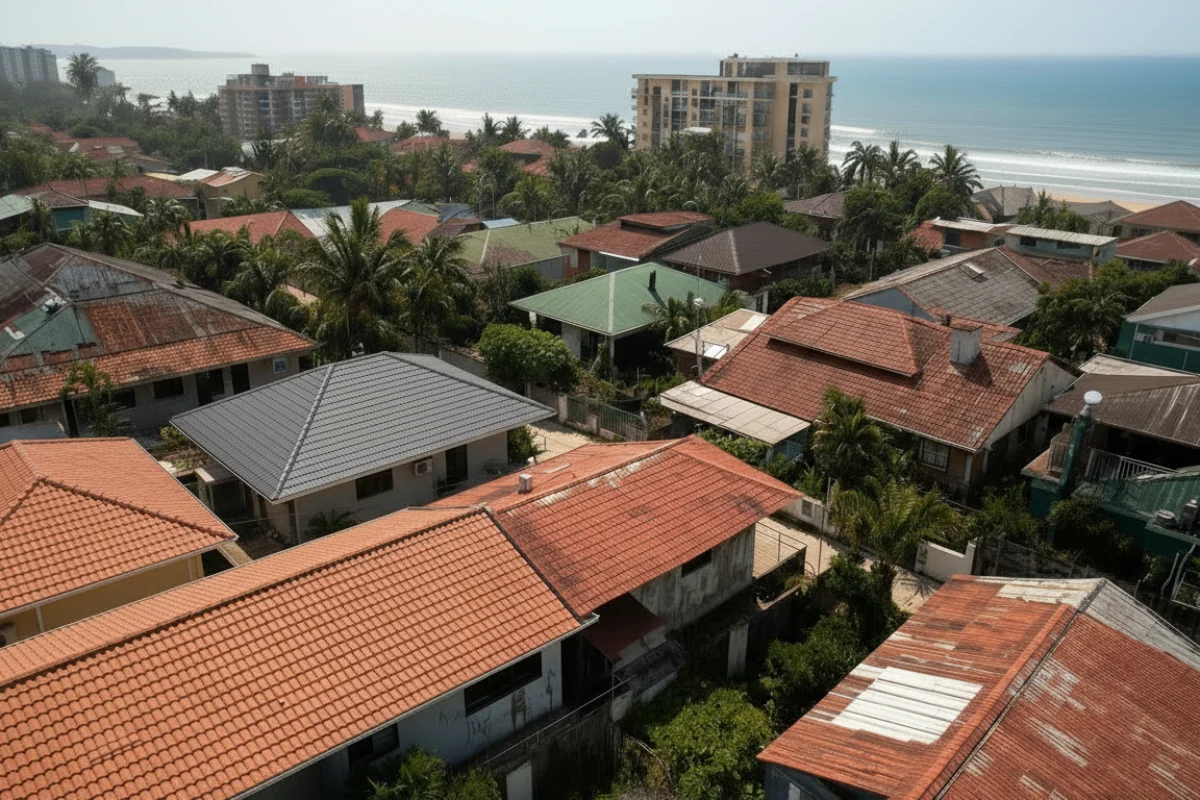
What coastal KZN does to roof coatings
UV and heat
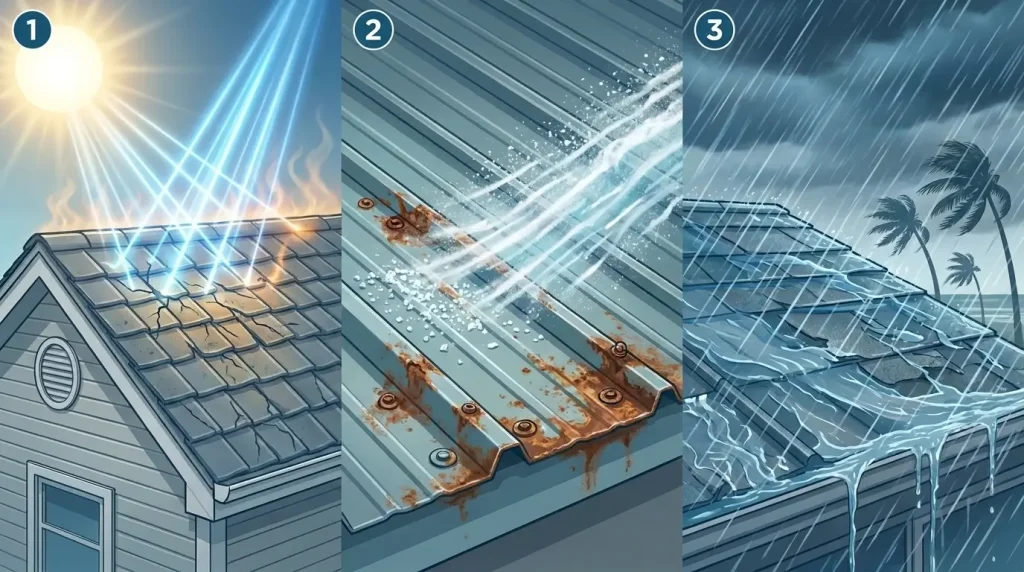
Durbanʼs high UV levels and hot roof-surface temperatures steadily break down many coating films. Over time, this can show up as chalking (a powdery surface), fading, loss of flexibility, and eventually cracking. A coating that starts off looking solid can still degrade if it is not designed for sustained UV exposure, especially on north-facing slopes and exposed flat areas.
Salt air and corrosion
Salt in the air accelerates corrosion on metal roof sheets, screws, and flashings, particularly where protective factory finishes are scratched or where water and dirt sit for long periods. A coating can slow corrosion by forming a barrier, but it cannot “seal in” active rust safely—if corrosion is not correctly treated first, it continues underneath and the coating often lifts or fails later.
Summer storms and wind-driven rain
KZN summer storms push water into places that light rain does not—under laps, into small cracks, around fasteners, and behind poorly sealed flashings. Wind-driven rain exposes weak detailing, not just weak materials. A coating system performs best when it is part of a broader waterproofing approach that includes repairs to joints, penetrations, parapets, and transitions.
Ponding water on low-slope roofs
Flat and low-slope roofs around Durban often hold water after heavy rain due to insufficient falls, blocked outlets, or uneven substrates. Ponding water is a
major stress test for coatings: some systems soften, blister, or wear prematurely when water stands for extended periods. If water consistently remains on the roof after storms, drainage correction is usually the first priority, otherwise even a good coating can fail early.
Non-negotiable: coating is not a rescue plan for a failing roof
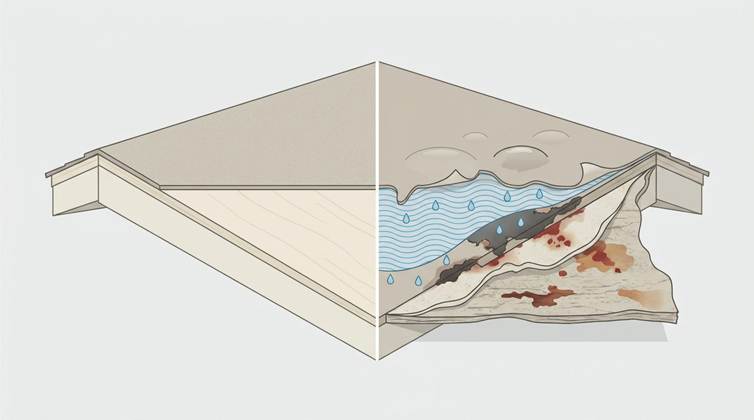
Sound vs failing substrate (cutaway)
Coatings extend roof life; they donʼt fix structural failure
A roof coating is designed to protect and extend the service life of a roof that still has a sound substrate. If the roof is already failing through structural movement, rotten decking, widespread membrane failure, or severe corrosion, coating it may hide problems for a short time but typically leads to bigger failures later. The best long-term result comes from fixing root causes first, then coating as a protective layer.
The roof must be sound, dry, repaired, and able to drain. Before coating, the roof should be stable, clean, and free of trapped moisture. Coating over wet areas can trap water in the system, leading to blistering, delamination, and accelerated deterioration underneath. Similarly, if the roof cannot drain properly, coatings are forced to perform outside their design conditions, which shortens lifespan and increases maintenance.
Metal roofs: surface prep and rust treatment decide success
On metal roofs, most coating failures trace back to poor preparation rather than the coating product itself. Loose rust must be removed, the surface must be cleaned, and rust must be treated with a compatible rust-inhibiting primer where required. If rust is simply painted over, corrosion continues beneath the film and the coating can lift, bubble, or peel. often starting around fasteners and overlaps.
Acrylic roof coatings (including acrylic elastomerics)
Where acrylic works well in Durban/KZN
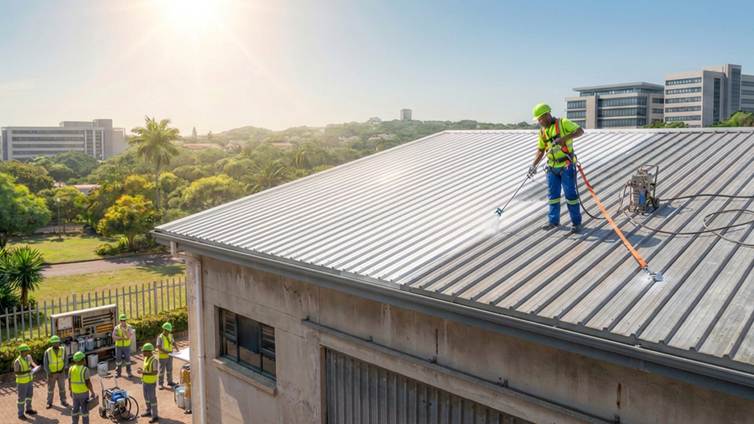
Acrylic coatings suit roofs that drain well and where the main goal is a cost- effective protective layer that reflects heat. In practice, that often includes pitched metal roofs and large roof areas where you want a “cool roof” effect. When the roof is in good condition and properly detailed, acrylic can be an effective and economical choice for KZNʼs warm climate.
Strengths in coastal conditions
Acrylic coatings can provide strong solar reflectivity, especially in white finishes, which helps reduce roof-surface temperature and indoor heat gain. Many acrylics are water-based, which makes them easier to apply and more practical in occupied residential or light commercial environments where odour and harsh solvents are a concern. For many owners, acrylic hits a good balance between performance and affordability—when used in the right scenario.
Where acrylic fails in KZN
Acrylics commonly struggle where water sits for long periods, because prolonged immersion can soften the film and lead to blistering or early wear. They are also sensitive to application conditions: high humidity, cool weather, or rain soon after application can interfere with curing and cause defects. Over time, chalking and dirt pick-up can reduce reflectivity if the roof is not cleaned and maintained.
Best-fit recommendation for KZN coastal
Acrylic is best when the roof has reliable drainage and you want reflective performance and value. It is not the best default for flat roofs with recurring ponding after summer storms. In coastal KZN, acrylic performs well when you treat it as part of a maintained roof system, not a once-off fix.
Polyurethane coatings (aromatic + aliphatic systems)
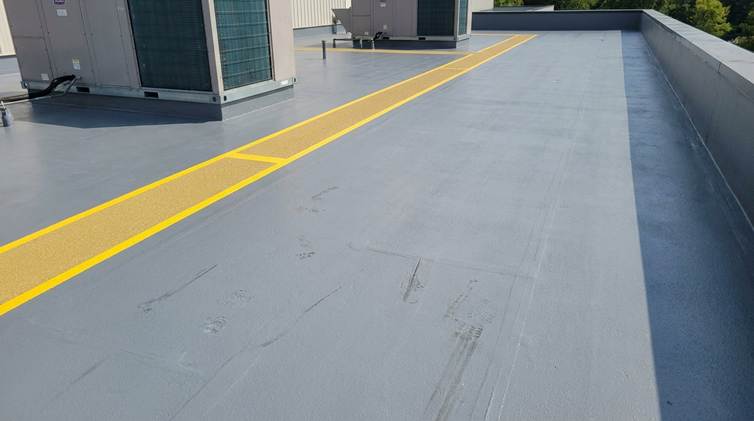
Polyurethane-coated flat roof with walkway
Where polyurethane works well in Durban/KZN
Polyurethane is often selected for roofs that face more physical wear, areas with maintenance foot traffic, equipment zones, or surfaces that need stronger abrasion resistance than acrylic typically provides. In Durban conditions, this can matter on commercial roofs, apartment blocks, and any roof where regular access is unavoidable.
Strengths in coastal conditions
Polyurethanes are known for toughness, abrasion resistance, and strong mechanical durability, which helps them hold up where the roof sees movement, impact, or wear. They also handle expansion and contraction well, which supports performance across temperature swings and substrate movement. For many projects, polyurethane is chosen when you want a more robust protective layer and are willing to invest in a higher-performing system.
Watch-outs in KZN
Polyurethane systems must be specified correctly for UV exposure, because aromatic polyurethane is commonly used as a basecoat and can degrade or discolour if left exposed without a UV-stable topcoat. Application conditions also matter in humid coastal weather, as some systems can react during curing if moisture control is poor. In addition, certain polyurethane products involve higher VOCs and odours, which can complicate use on occupied sites and require careful planning.
Best-fit recommendation for KZN coastal
Polyurethane is a strong option when durability and wear resistance are priorities, particularly when paired with the correct UV-stable topcoat. In Durban, it can be an excellent choice for demanding roofs, provided the installer follows specification and weather windows closely.
“Elastomeric” coatings: what the term really means
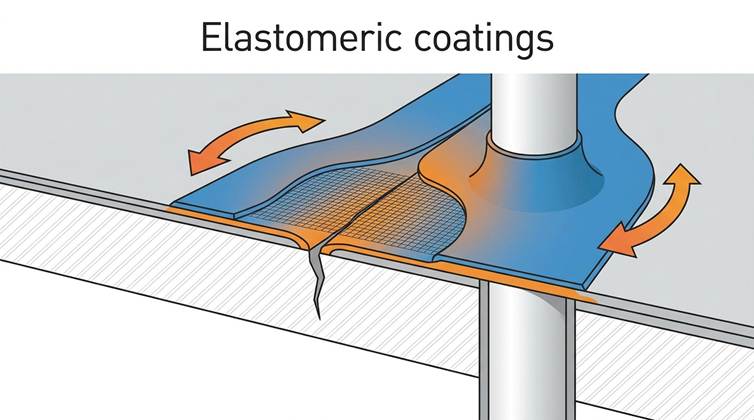
- Elastomeric detail bridging movement at penetration
- Elastomeric describes flexibility, not a single product type
“Elastomeric” refers to coatings with rubber-like flexibility that allow the film to stretch and recover as the roof moves. This matters because roofs expand and contract under heat, and small cracks can open around joints and transitions. Acrylic, silicone, polyurethane, and other chemistries can all be elastomeric, so the term is about behaviour, not just ingredients.
Where elastomerics help in KZN
Flexible coatings are especially valuable around roof details: seams, parapets, corners, penetrations, and flashing transitions, exactly the points that Durban storms exploit. Elastomeric systems can bridge hairline cracks and accommodate movement, reducing the chance of water finding a path through small openings. In many successful systems, reinforcement fabric at seams and penetrations adds extra security in wind-driven rain conditions.
Key limitations (important for South African roofs)
Elastomeric coatings can seal minor defects, but they cannot compensate for serious problems like failed flashings, structural damage, saturated insulation, or long-term drainage issues. If the roof is already compromised, a flexible coating may delay visible leakage while the underlying damage continues. The practical takeaway is that elasticity is a performance feature, not a substitute for proper repair work and drainage correction.
Best-fit recommendation for KZN coastal
Look for elastomeric performance where movement and cracking are expected, but still choose the chemistry based on drainage, UV exposure, and substrate type. In Durban, elastomeric detailing at seams and penetrations is often the difference between a coating that lasts and one that fails after a few storm cycles.
Aluminium and aluminium/bitumen (asphaltic) reflective coatings
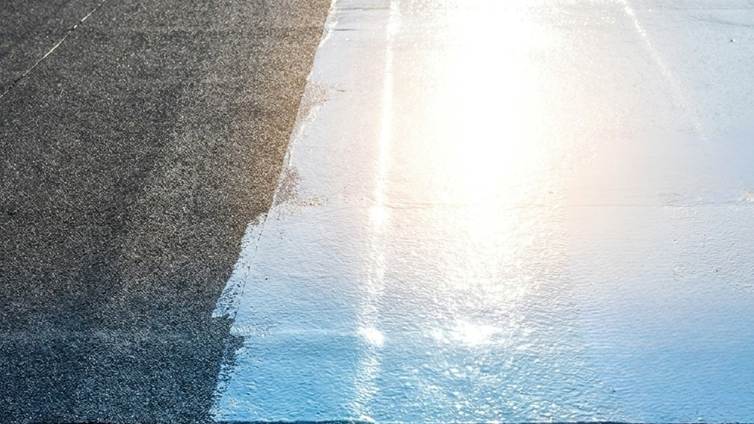
Where aluminium/bitumen systems can work well in KZN
These coatings are commonly used to protect compatible membrane roofs by adding a reflective, weather-resistant layer. They can be a practical choice where the objective is to reduce UV load on the underlying bituminous system and improve longevity. On the right substrate, they can form part of a maintainable roof plan that allows periodic recoating rather than full replacement.
Strengths in coastal conditions
Aluminium-based reflective coatings reduce heat and UV exposure on the roof surface, which helps protect underlying membranes from premature ageing. They can also provide an additional barrier against weathering, which is valuable in coastal zones where sun and storms combine to accelerate deterioration. For certain roofs, their re-coatable nature supports a long-term maintenance approach.
Watch-outs in Durban/KZN
Compatibility and preparation are critical: these are not universal coatings that can be applied over any roof without proper assessment. The roof must be repaired, clean, and fully dry before coating, otherwise adhesion and long-term performance suffer. As with other systems, they will not compensate for trapped moisture or chronic ponding that has not been addressed.
Best-fit recommendation for KZN coastal
Aluminium/bitumen coatings can be a smart choice where you have a suitable membrane roof and want UV protection with a maintainable, re-coatable surface. In Durban, they work best when used within a planned maintenance cycle and applied over a properly prepared substrate.
Bitumen and UV: why exposed bitumen fails faster in KZN sun
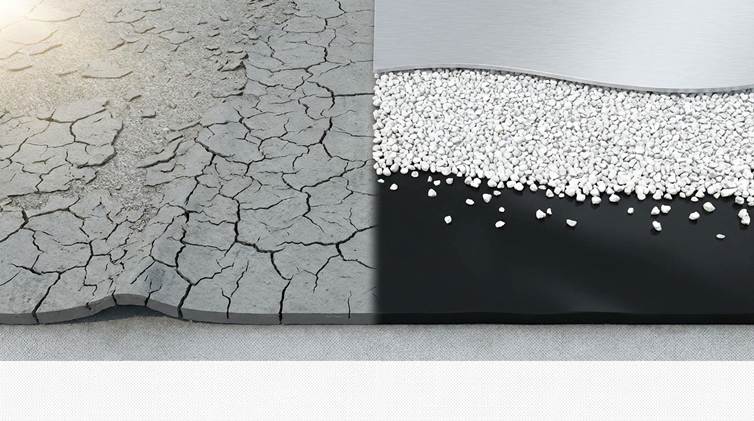
UV-damaged vs protected bitumen (before/after)
What UV does to bitumen over time
Bitumen is a hydrocarbon-based material, and prolonged UV exposure accelerates oxidation and chemical breakdown. As this happens, the material typically becomes harder and less flexible, which increases brittleness and the likelihood of cracking. In a high-UV environment like KZN, exposed bituminous materials can age faster if they do not have protective surfacing.
How to improve bituminous performance in Durban conditions
Polymer-modified bitumen systems improve flexibility and resistance to ageing, and protective finishes help reduce direct UV attack. Reflective or mineral surfacing, and compatible protective coatings, can lower surface temperatures and slow deterioration. In real-world roof performance, correct detailing at laps and junctions, plus proactive maintenance, matters as much as the material choice itself.
What to choose (simple Durban decision guide)
Choose acrylic if drainage is good and reflectivity is the goal
Acrylic is a strong fit when the roof drains properly and you want a cost- effective, reflective coating that improves heat performance. It is often suitable for pitched metal roofs and well-drained surfaces where ponding is not a recurring issue. The key is matching acrylic to conditions it can handle consistently, then maintaining reflectivity through periodic cleaning.
Choose polyurethane if you need toughness and a correctly specified UV system
Polyurethane suits roofs that need higher abrasion resistance and durability, especially where access and wear are common. In Durban, the correct layer build-up is essential so that UV exposure does not degrade the system. When specified and installed correctly, polyurethane can deliver a robust, long-lasting protective layer.
Choose aluminium/bitumen where the roof build-up is compatible and UV protection is key
Aluminium/bitumen coatings make sense where you are protecting a compatible membrane roof and want to reduce UV damage while extending service life. They are particularly useful in a maintenance-led strategy where recoating is part of long-term planning. The decision should still be based on substrate condition, moisture, and drainage.
Avoid coating until repairs are done if there is moisture, failure, or chronic ponding
If the roof has trapped moisture, active leaks from failed details, widespread substrate failure, or standing water that does not clear after storms, coating should not be the first step. In these cases, repairs and drainage correction come first, because coatings cannot safely “lock down” a failing system. Treat coating as the final protective layer after the roof is made sound.
The Durban coastal checklist (what makes coatings last)
Fix drainage first
Drainage problems cause repeated wetting, ponding, and accelerated breakdown, especially during KZNʼs storm season. Clearing outlets, correcting falls, and addressing box-gutter capacity and overflow paths reduces water- related stress on every coating type. When drainage improves, coatings perform closer to their design intent and last significantly longer.
Repair and reinforce details
Most leaks start at details, seams, corners, penetrations, and flashings because these points move and concentrate water flow. Reinforcement fabric and correct detailing create strength where the roof is most vulnerable during wind-driven rain. A good coating job is usually defined by detail work more than by how the main field area looks.
Treat rust properly on metal roofs
Salt air accelerates corrosion, so rust treatment on coastal metal roofs is not optional. Removing loose corrosion, cleaning thoroughly, and applying a compatible rust-inhibiting primer prevents the coating from failing from underneath. Done properly, rust prep turns coating from a cosmetic layer into a genuinely protective system.
Clean and dry the roof fully
Coatings need a clean, dry surface to bond correctly. Dirt, oils, chalking, algae, and residual moisture can all reduce adhesion and cause blistering or delamination later. In humid Durban conditions, allowing enough drying time after washing and avoiding coating when dew or rain is likely can be the difference between a durable job and an early failure.
Apply correct thickness
Many coating failures come from under-application: the film is too thin to handle UV, movement, and weathering. Manufacturers specify wet and dry film thickness for a reason, and achieving that thickness consistently across the roof is essential. A properly built film also performs better at bridging minor defects and resisting premature wear.
Planned maintenance
A coating is part of a system, not a “fit and forget” product—especially at the coast. Regular inspections after storms, cleaning to maintain reflectivity, and prompt repairs to small damage prevent minor issues from turning into widespread failure. A simple maintenance plan extends coating life and protects the underlying roof investment.
Use Elite Roofing & Waterproofing
If your roof is in Durban or along the KZN coast, start with a proper condition check and drainage assessment before choosing a coating. The fastest way to get the right outcome is a site inspection that confirms the substrate condition, identifies ponding and detailing risks, and matches the coating system to your roof type and budget so you donʼt pay twice for a coating that fails early. Contact Elite Roofing and Waterproofing to book a roof assessment and get a recommended coating plan with clear prep steps, product options, and a maintenance schedule.