If you’re planning a new roof installation in KwaZulu‑Natal, you’re not just choosing a look, you’re choosing a weather proofing system.
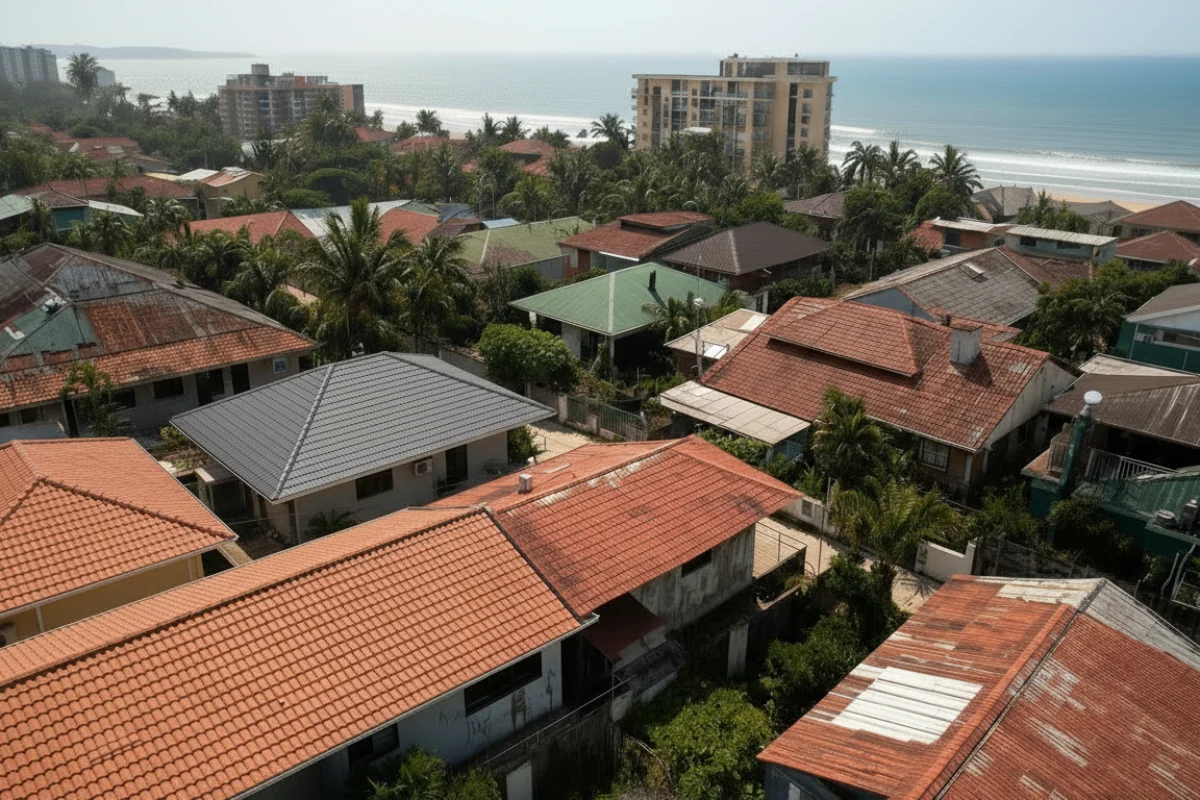
KZN roofs take consistent punishment: humid air, heavy summer downpours, wind‑driven rain, harsh UV, and (near the coast) salt that accelerates corrosion. A roof that works well inland can fail early a few kilometres from the ocean if the materials and details aren’t specified for coastal conditions. The good news is with the right roof type, correct installation, and properly designed waterproofing details, you can get decades of reliable performance.
What “a new roof installation” really includes (and why it matters)
A roof is a system, not just sheets or tiles. A professional new installation should cover:
- Structure: trusses/rafters, bracing, anchoring and load paths (especially for wind uplift).
- Underlay and waterproofing layers: sarking, vapour control where needed, and membrane systems on flat/low‑slope areas.
- Covering: tiles, metal sheeting, slate, shingles, etc.
- Critical details (where most leaks start):
- valleys and hips
- wall flashings and counter‑flashings
- ridges and barges
- skylights and roof penetrations (solar brackets, flues, pipes)
- parapet caps and upstands
- box gutters and internal gutters
- Drainage: gutters, downpipes, overflows, outlets, leaf guards (where appropriate).
- Fixings and corrosion protection: fasteners, washers, coatings, sealants and compatible metals.
- Handover: photos, maintenance guidelines, and a clear workmanship guarantee.
If any of these are treated as “extras”, you’re likely to pay for it later in leak repairs.
Roof types commonly installed in KZN (pros, cons, and best-fit use cases)
1) Pitched metal roofs (IBR, corrugated, concealed‑fix/standing seam)
Where it fits
- Most KZN homes and light commercial properties
- Good option for renovations and conversions from old tiles
- Great for complex roof shapes when detailed properly
Why people choose it
- Fast installation and strong weather protection
- Lightweight (less structural load than tiles)
- Excellent water shedding on adequate pitch
- Works well with insulation and radiant barriers for heat control
Watch-outs in KZN
- Coastal corrosion: if you’re near the sea, you need the correct substrate/coating spec and corrosion‑resistant fasteners. Salt air will punish shortcuts.
- Thermal movement: long sheet runs need correct detailing so expansion doesn’t loosen fixings or open laps.
- Condensation risk: humid air + temperature swings can cause “roof sweat” without the right underlay/ventilation.
Recommended solution
- Coastal: specify a corrosion‑resistant sheeting system, compatible flashings, and stainless or appropriately coated fasteners, plus a maintenance plan (salt wash‑down where exposure is high).
- Inland: high‑quality coated steel with correct underlay and insulation remains a cost‑effective, long‑life option.
2) Concrete roof tiles
Where it fits
- Traditional residential roofs in Durban suburbs and inland KZN
- Good for homeowners who want a classic look and acoustic comfort
Why people choose it
- Good noise performance in heavy rain
- Strong visual appeal and resale familiarity
- Individual tiles can be replaced (useful after storms)
Watch-outs in KZN
- Tiles are heavy and need correct truss design.
- Wind uplift can lift tiles if mechanical fixing patterns are skipped.
- Valleys, sidewall flashings and junctions fail if workmanship is poor.
- In humid/coastal zones, moss/algae and salt exposure can accelerate ageing.
Recommended solution
- Use a proven tile system with correct under‑tile membrane/underlay, mechanical fixing where required, and high‑quality flashings at all junctions.
- Prioritise robust valley and sidewall detailing — most “tile roof leaks” aren’t the tile; they’re the details around it.
3) Clay roof tiles
Where it fits
- Higher-end residential properties and heritage looks
Why people choose it
- Premium appearance and long service life when installed correctly
- Colour stability and strong UV performance
Watch-outs in KZN
- Brittle under foot traffic (maintenance needs care)
- Needs correct fixing and underlay in wind zones
- Still dependent on high‑quality detailing and drainage
Recommended solution
- Best for homeowners who want a long‑term, premium finish and are willing to invest in quality underlay, flashings and professional installation.
4) Slate (natural or fibre-cement alternatives)
Where it fits
- High-end, architectural builds; specific aesthetic requirements
Why people choose it
- Distinctive look, strong durability (natural slate)
- Can be exceptionally long-lasting when detailed well
Watch-outs in KZN
- Specialist installation; incorrect fixing or underlay leads to early problems
- Weight and cost considerations
Recommended solution
- Choose slate when the design warrants it — then commit to specialist workmanship and correct underlay, fixing and flashing details.
5) Flat and low‑slope roofs (concrete slabs, balconies, parapets, box gutters)
Flat roofs are common on modern homes, apartment buildings, extensions, and commercial properties. In KZN, they require extra respect.
Where it fits
- Modern architectural designs
- Roof decks, balconies, podium slabs
- Internal gutters and complex junctions
Why people choose it
- Clean lines and usable outdoor space
- Works well for HVAC/plant areas (commercial)
Watch-outs in KZN
- Flat roofs fail at edges, joints and penetrations far more often than in open areas.
- Heavy summer rain exposes any weakness immediately.
- Ponding water shortens coating life and finds pinholes.
- Parapets often leak because caps, upstands and drip edges were skipped or poorly designed.
Recommended solution
- Ensure correct falls and drainage design from day one (water must move).
- Use the right membrane system for your roof and risk profile:
- Torch‑on membranes: proven when correctly installed, but failures usually come from bad detailing, overheating, or poor substrate preparation.
- Liquid-applied membranes (acrylic, polyurethane, silicone): can be excellent, but performance depends on prep, reinforcement at joints, and selecting a product suited to ponding water.
- Always reinforce and detail:
- outlets and sumps
- upstands and terminations
- parapet caps
- expansion joints
- transitions between roof and wall
Recommended roofing solutions by KZN property type
Coastal homes (Durban beachfront, Umhlanga, Ballito, South Coast, etc.)
Primary risks: salt corrosion, wind-driven rain, high humidity.
Best-fit solutions
- Corrosion‑resistant metal roofing systems (with compatible fasteners and flashings).
- Regular maintenance plan: wash-down schedules, inspections after storm season, early rust treatment.
- If using tiles: insist on wind‑appropriate fixing and top‑tier waterproofing details.
Inland residential homes (Westville, Hillcrest, Kloof, Pinetown, Pietermaritzburg)
Primary risks: heavy rain, storm wind, heat and humidity, seasonal mould.
Best-fit solutions
- Metal sheeting with correct underlay + insulation for thermal comfort.
- Concrete or clay tiles where acoustic comfort and traditional look matter.
- Upgrade drainage: correctly sized gutters and downpipes for intense summer rain bursts.
Modern homes with flat roofs, balconies and parapets
Primary risks: waterproofing detail failures, ponding, parapet leaks.
Best-fit solutions
- Design falls and outlets first; waterproofing comes second.
- Use a membrane system matched to exposure and ponding risk, with reinforced detailing at every edge and penetration.
- Treat parapets as a “mini-roof”: cap, drip, upstand and termination must be correct.
Commercial and industrial properties (warehouses, retail, factories)
Primary risks: long roof spans, thermal movement, box gutters, fastener fatigue, maintenance access.
Best-fit solutions
- Concealed‑fix metal roofing (often ideal for long runs and weather performance).
- Engineering-led detailing for:
- movement joints
- box gutters and overflows
- penetrations for services
- Add scheduled maintenance: gutter clearing, fastener checks, coating inspections.
Here’s a practical checklist before you approve a new roof quote
Use this list to compare quotes apples-to-apples:
- Material specification
- Roof covering brand/type and thickness
- Coating type and corrosion category (especially coastal)
- Fastener type (stainless/compatible coated) and washer spec
- Underlay / membrane
- Which underlay is included and where it will be installed
- Membrane type for flat/low-slope areas and reinforcement details
- Flashings and waterproofing details
- Valleys, wall flashings, parapet caps, skylights, penetrations
- Drainage
- Gutters/downpipes sizing and layout
- Overflows and emergency outlets (critical on internal gutters)
- Insulation and ventilation
- Roof insulation type and thickness
- Venting strategy to reduce condensation and heat build-up
- Workmanship and compliance
- Installation method and fixing patterns for wind exposure
- Work-at-heights safety plan and site protections
- Handover and warranty
- Workmanship guarantee terms
- Maintenance guidance and recommended inspection schedule
Alternatively, If you want a professional, peace‑of‑mind service provider and you do not want the headaches of checking, chasing, or managing a new roof installation, contact Elite Roofing & Waterproofing.
Conclusion
For KZN, the “best roof” is the one that matches your property type, exposure (coastal vs inland), and design (pitched vs flat), and is installed with disciplined waterproofing details and the correct corrosion spec. Most roof failures aren’t mysterious; they’re predictable, repeatable detail issues.
If you want a new roof installation that’s built for KZN’s climate, Elite Roofing & Waterproofing can inspect your property, recommend the right system, and install it with the details that prevent leaks, not just cover them up.
Speak to an Elite Roofing and Waterproofing expert:
Darren – +27 73 306 4448
Justin – +27 84 942 6279
or Send Us A Message (Click Here)
Next step: Book a roof assessment and get a specification-led quote that fits your property and your exposure zone.